
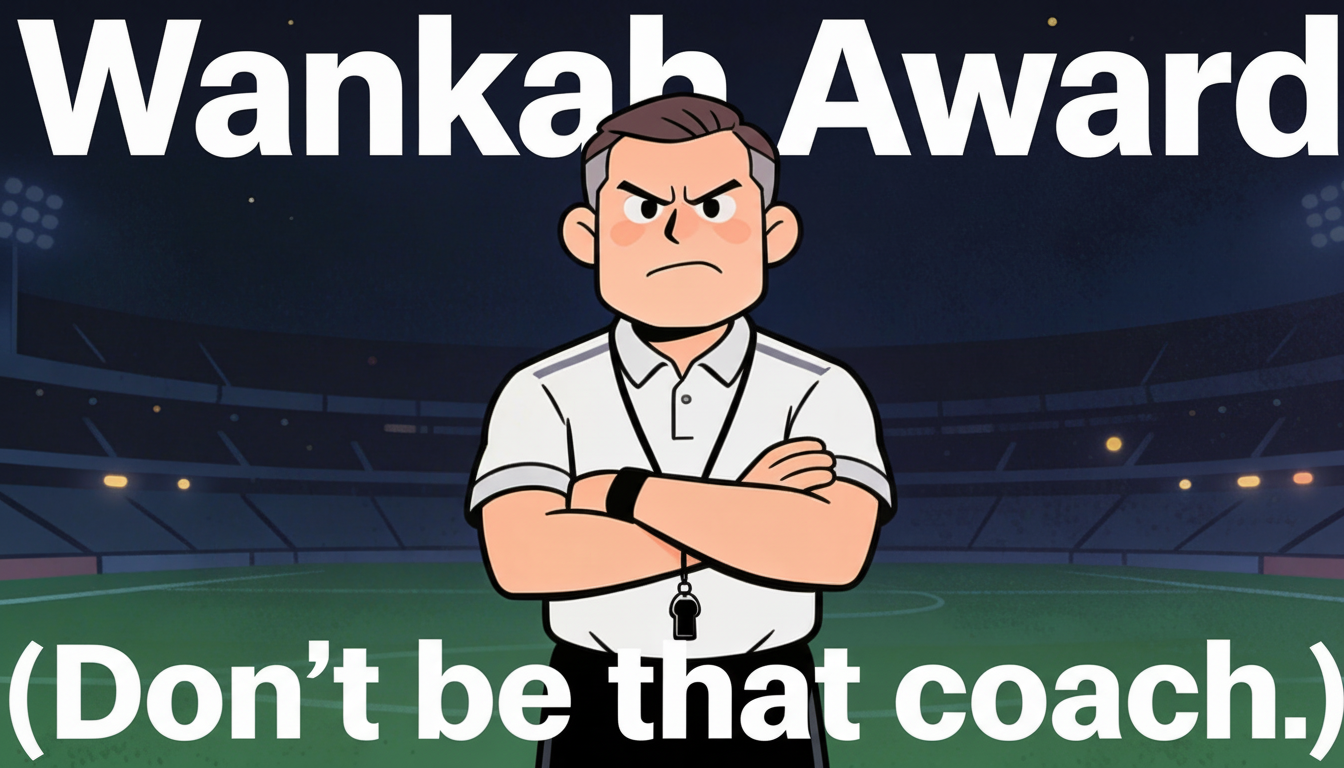
Today’s Wankah Award (what not to do) goes to the coach who, after an unexpected loss (or tie), keeps their team hostage on the sideline and spends 30 minutes tearing them apart.
I’ve seen it more than once: the fans are gone, the athletic directors are gone, the other team is long gone—and one coach is still out there, ranting at their players as the stadium lights go dark. In one case, I actually left the lights on longer just so I could selfishly listen to the coach’s tirade after our less‑skilled team beat them.
There is no reason to rip your team to shreds after a game like that. Players are already emotionally raw. The outcome can’t be changed. The main thing a meltdown accomplishes is burning trust, embarrassing athletes, and turning one bad performance into a long‑term culture problem. As much as it might feel like “high standards” in the moment, it’s usually just a public display of a coach’s own insecurity.
A better option is simple and still honest: briefly point out 1–2 areas that clearly need improvement, acknowledge the group’s disappointment, and then take responsibility as the coach for them being underprepared. Tell them you’ll address it in training over the next few days, and then let them go. That doesn’t mean players are off the hook; it means the real work happens when emotions have cooled and everyone can think clearly.
Yes, there are times when players underperform, lose focus, or don’t bring the effort the moment requires. But the postgame lashing is never the best way to deal with that, especially in front of an empty—or worse, half‑empty—stadium. When coaches unload on their team after games, it’s often less about player standards and more about a coach trying to outrun their own doubts about preparation, tactics, or leadership.
So don’t be a Wankah and yell at your team until the lights go off. If you make that your habit, it’s only a matter of time before your own coaching lights dim too. High standards and accountability matter—but so does timing, humility, and the courage to own your part first.
Want more team culture related material as it comes out? Subscribe to our free newsletter below!


Leave a Reply to Doug Cancel reply