
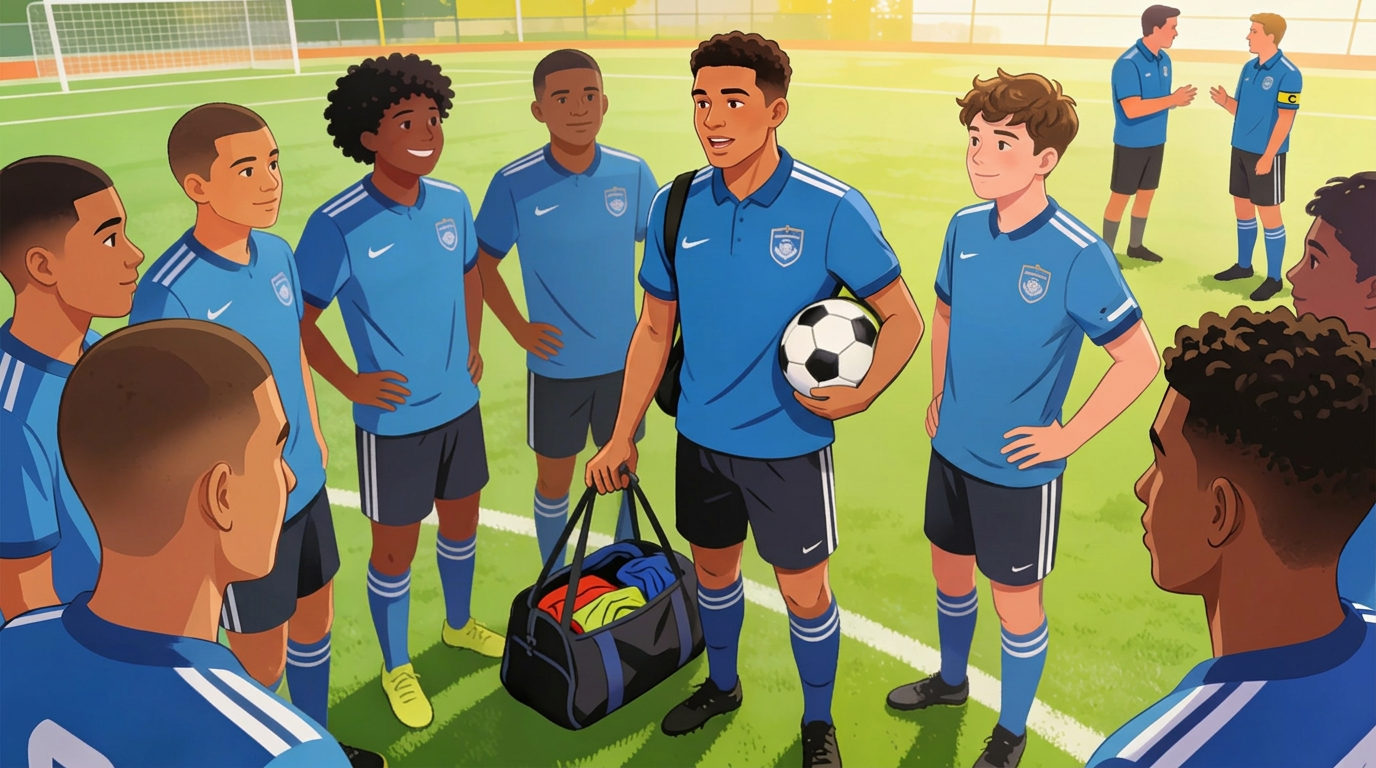
Strong team culture doesn’t happen overnight, it’s built daily through intentional structured leadership. Captains set the tone for how a team communicates, competes, and supports one another. The best captains model values through action, helping teammates grow and keeping everyone aligned around shared purpose, none of which are accomplished by simply putting on the “Captain” armband.
Ten ways captains shape strong team culture every day:
10. Arrive Early and Set the Tone
Captains show their commitment through presence. Arriving early to greet teammates, check in with coaches, and help with setup signals that practice matters and relationships matter even more. Those few extra minutes of connection can set the tone for the entire session.
9. Boost Team Energy Before Games and Breaks
A strong captain manages emotion and momentum. Before kickoff or after halftime, they lift the group’s energy—sometimes through words, sometimes just through contagious enthusiasm and body language. The team follows their example.
8. Carry the Team Gear
Leadership often shows up in the smallest tasks. When captains shoulder the extra load—literally—it communicates humility and “we before me.” Teams take notice when their leaders serve first.
7. Keep Coaches Updated on Team Energy
Captains bridge the gap between players and staff. They let coaches know when the team vibe is high and ready to push, or when players may be running low and need a lighter session. This feedback loop helps create smarter, more responsive training.
6. Reinforce Standards to Protect the Flow State Environment
When teammates slip on effort, focus, or attitude, a captain addresses it directly with compassionate communication. They remind others of shared standards, not personal opinions. This keeps accountability positive and protects the flow state environment that is needed for team and individual growth.
5. Steady the Team After a Rough Patch
Every team hits moments of adversity. Captains help the group breathe, recalibrate, and respond. Whether it’s a mistake, missed opportunity, or tough loss, great captains bring calm and conviction back to the group, making sure that everyone feels highly valued, regardless of the numbers on the scoreboard.
4. Teach and Support New Players
Team culture grows strongest when knowledge is shared. Captains help new players learn tactical concepts, training habits, and team expectations so they can integrate quickly and feel part of the group from day one.
3. Organize Team Social Events
Connection off the field builds chemistry on it. From team dinners to volunteer days, captains create opportunities for players to get to know each other as people, not just athletes.
2. Listen to Teammates
Strong captains listen first. They earn respect not only by speaking up but by making sure everyone feels heard—whether it’s ideas, frustrations, or feedback. Listening builds trust, and trust strengthens team culture.
1. Compete Every Day
The best captains compete hard in every drill and push teammates to do the same. Healthy, competitive training sessions raise the team’s standard and prepare everyone to translate tactical and technical skills confidently into match play.
Conclusion
Captains don’t just influence how a team plays—they influence how a team feels. Their habits ripple outward, shaping the flow environment that enables long-term success. When captains embody the values of effort, humility, and communication, they become the heartbeat of the team culture that every player wants to be part of.
More Team Culture News
-

Team Culture Pillar #2: Compassionate Communication Is the Norm
Compassion under pressure defines strong team culture. When honest feedback flows with respect, players grow fearless and connected. Continue Reading
-

10 Things Captains Do to Build Strong Team Culture
Great captains build strong team culture through daily habits like arriving early, listening actively, and competing hard. Continue Reading
-

Wankah Award: Coaches of Females Who Don’t Use ACL Prevention Exercises
This Wankah Award goes to all coaches who skip ACL prevention exercises for female athletes! My 15-min routine: 7 yrs, 200+ players, zero ACL tears. Continue Reading
-

Team Culture Award #3: Emma Hayes
Emma Hayes, our 3rd Team Culture Award winner, transforms every coaching environment she sets her managing boots in. Continue Reading
-

Team Culture Pillar #1: Everyone Feels Highly Valued
When everyone feels highly valued, roles gain meaning, effort skyrockets, and team culture becomes the engine behind performance. Continue Reading
-

Top 10 Reasons Why I Coach College Soccer
I like to remind myself why I coach college soccer—because when the grind gets tough, remembering my “why” pulls me back to the heart of the job. Continue Reading
-

Wankah Award: The GK Coach Who Forgot Tomorrow’s Game
Volunteer GK Coach Shawn wins this Wankah for a reckless pre-game dive drill that injured his star keeper, costing her a shot vs. Jesuit powerhouse—proving old drills aren’t… Continue Reading
-

The Composure vs. Intensity Thermostat
Whether consciously or not, every coach decides the setpoint of the Composure vs. Intensity thermostat. So, how can you dial up the best thermostat setting for your team? Continue Reading
Leave a Reply