
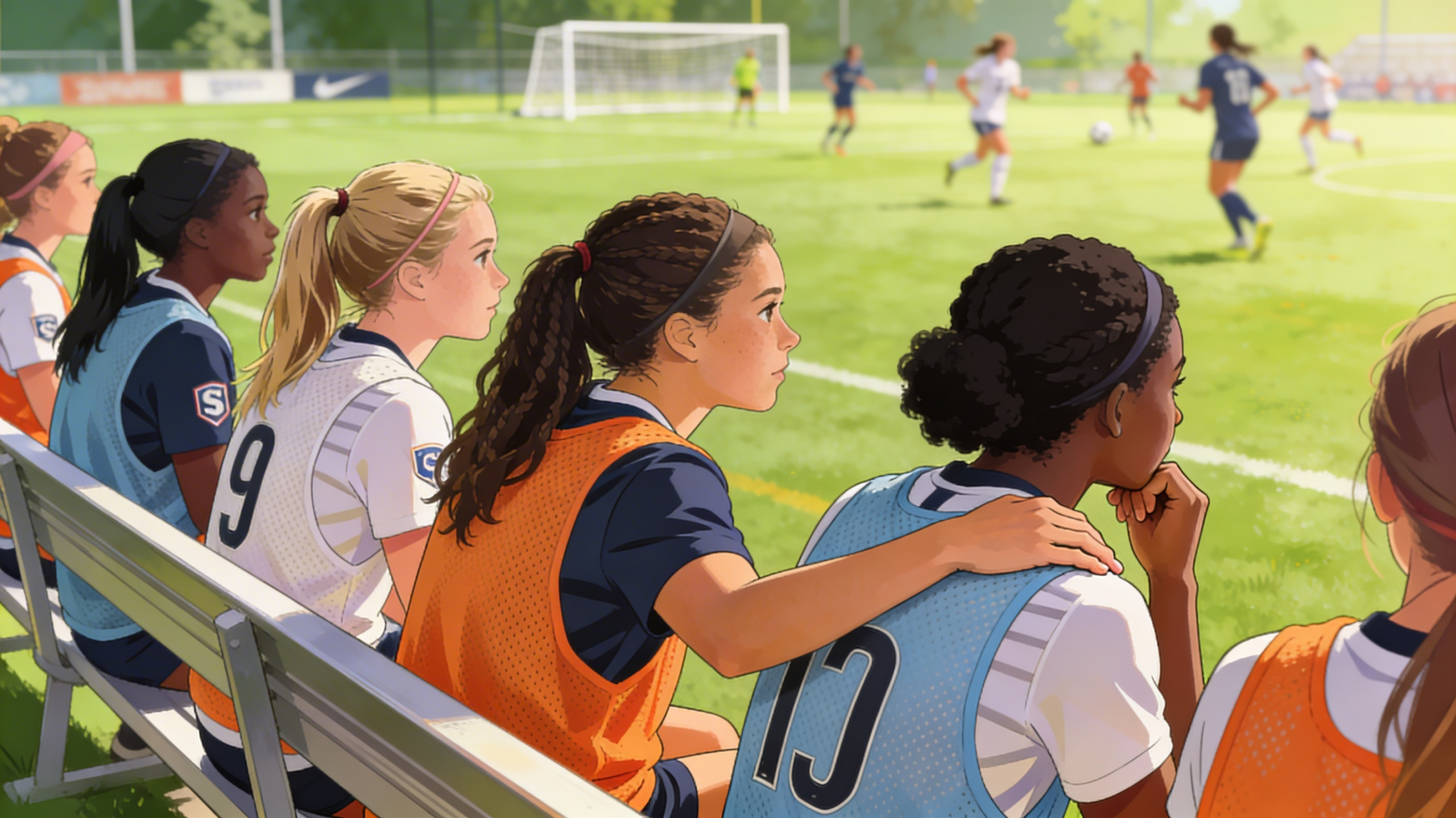
Parents and Playing Time
Let’s start with the basics: parents should almost never discuss playing time with their child’s coaches. Coaches make playing decisions for many reasons — effort, consistency, attitude, tactics — and most of those reasons aren’t visible to parents. If you truly want to influence playing time in a positive way, compliment the coach on how well they bring on substitutes — I like to call them “game-changers” — into the game. Even if that’s only partly true in your mind, you may be surprised how hearing that they’re good at using their whole roster encourages a coach to think more intentionally about getting those game-changers involved.
If a player isn’t getting the time they hoped for, that’s a key opportunity to learn one of sports’ greatest lessons: individual accountability. It’s up to the player to decide how they’ll respond — by working harder, seeking feedback, or improving in specific ways. There is nothing I enjoy more than watching a player make a conscious decision to improve in a specific area and then put in the work to match that decision. The most common outcome of that sequence is an accelerated growth curve and a proud smile at the end of the season.
When parents step in to discuss their child’s playing time, it undermines that opportunity for their own child. It takes away the player’s ownership of their growth and muddies the connection between effort and reward. Even if the player later earns more minutes, they’ll never truly know whether it came from their hard work or from a parent’s intervention.
Instead, when playing time is limited, it’s a perfect moment for parents to encourage perseverance. Remind your child:
- You can only control your own effort.
- You can ask your coach what to improve on.
- You can help the team in other ways or be a supportive teammate while you develop.
Players learning to handle limited playing time with maturity is a life skill far more valuable than any technical athletic ability.
Players: How to Talk to your Coach about Playing Time
If you’re not getting the minutes you want, don’t wait for someone else to speak up — own the conversation yourself. Approaching your coach respectfully shows maturity, initiative, and a growth mindset, which are qualities that naturally lead to more trust and opportunities, while building team culture through open dialogue.
Here’s how to have that conversation effectively:
- Pick the right time and place. Schedule a one-on-one outside of practice or games — never in the heat of the moment on the sideline. Say something like, “Coach, do you have 10 minutes this week to talk about my development?”
- Prepare specific questions. Come ready with observations about your own game, not demands. Try:
- “What specific areas should I focus on to earn more playing time?”
- “How can I best help the team right now?”
- “What did you see in practice that I can improve?”
- Listen more than you talk. Take notes on the feedback — effort in drills, positioning, decision-making — and follow through. Coaches respect players who act!
- Follow up with action. After the talk, double down on those improvements and check in later: “Coach, I’ve been working on [X] — have you noticed any progress?”
This isn’t about entitlement to playing time; it’s about building a partnership. Coaches welcome players who communicate openly about their desire to improve — it separates you from the pack and accelerates your growth. The bench is temporary; the skills you build on your team last a lifetime.
Coaches and Communication About Playing Time
While parents overstep in playing-time discussions, coaches often make the opposite mistake — not communicating enough about it. Players deserve to know what the team standards are and what they’re being evaluated on. When coaches leave those expectations unclear, players start guessing, and parents start asking questions.
To prevent that confusion: Address playing time yourself.
- Clearly explain your playing-time philosophy during your preseason parent meeting.
- Remind players regularly about what matters most in EVERY position on the field — effort, speed, execution, attitude, or tactical fit.
- Provide regular feedback to game-changers so they know exactly what they can do to earn more minutes.
Open communication about playing time standards builds team culture and reduces frustration for everyone involved, so don’t shy away from these critical conversations and discussions about playing time!
Tip For College Coaches
At the college level, the same principles apply with even higher stakes. Coaches should be upfront in the off-season about what players need to improve — physically, technically, and mentally — to earn playing time at this uber-competitive level.
If players arrive unprepared, they’ll find themselves on the bench and may blame the coach for their lack of playing time. That’s why I try to balance being the “chill, supportive coach” with blatant honesty about what real growth demands: relentless hard work. It’s easier to be the warm and fuzzy coach in the off-season, but the best route — for the athletes and the program — is to be genuine about how challenging college athletics is. In reality, the off-season is a college athlete’s primary opportunity to grow and earn more playing time and college coaches must make it crystal clear how important this off-season work is in earning additional minutes.
The Bottom Line on Playing Time
Playing time will never feel perfectly fair to everyone. But that doesn’t mean we should avoid talking about it. The key is compassionate communication — honest, caring conversations in a safe setting, even on tough topics like this.
For coaches and players alike, mastering these conversations builds stronger teams and better people. If my athletes leave PCC Women’s Soccer with one major life skill, I hope it’s this: how to have hard conversations with kindness and integrity. That ability will take them far beyond the pitch — in their careers and relationships.
Want more insights on building winning team culture as a coach, player or parent? Subscribe below for free coaching tips and player development strategies.
Leave a Reply