
Larry, Before He Was My “Coach”
When I first knew Larry Carlson, he was not a coach, not yet a marine, just the starting goalkeeper at Northfield High School when I was in middle school. He was four years older than me, so we never shared a high school team, but I watched him from the sideline as he backstopped our ragamuffin squad to an upset playoff win over #2 seeded Burnsville during his senior season in 1988. Larry was an incredibly gifted goalkeeper and the rumor was that he had an offer to play professional soccer in France out of high school, but he turned it down to join the Marines because, as he said to me, he needed more discipline.
In the 1980s and 1990s, rural Minnesota was as white as the milk in the local dairy cows and Larry was one of only Black people I saw around town. Even his parents were white, as they adopted him sometime before he was a year old. I can only imagine the quiet resilience that required of him, even if I never saw him directly bullied for his skin color.
One vivid memory of Larry isn’t even about soccer. I remember standing in his driveway in middle school, as he patiently taught me how to throw a curveball. My (hanging) curveball would later become the pitch that hitters feasted on when I was on the mound, but that’s not the point; I still valued his time, his attention, and his belief that I could learn something hard.
More Than Technique: The Power of Belief
Years later, that same patience showed up again when my path and Larry’s crossed on the soccer field. In the fall of 1990, he came back to Northfield High School as a volunteer goalkeeper coach while he was on a leave from the Marines. I had planned to play in the midfield, but our starting goalkeeper had moved away over the summer, and suddenly there was a huge vacancy which the head coach thought I might fill. Thank goodness for Larry, as he stepped in to teach me strong goalkeeping technique, and more importantly how to stand in that muddy goal mouth with courage.
Larry knew the technical side of goalkeeping: angles, footwork, positioning, how to read a striker’s body language. But what stayed with me wasn’t a particular drill or coaching cue; it was how clearly I could see that he believed in me. He was patient when I made mistakes, steady when I was unsure, and generous with his confidence in my potential, even if he could run faster backwards than I could run forward saying “If you catch me, you don’t have to do any more sprints today!” I never caught him.
That belief in a person, to me, is the essence of effective coaching and team culture. Knowledge matters, but the real human connection is letting an athlete feel, in their bones, “My coach thinks I can do this.” That’s what Larry gave me during that one fall in 1990. Without that season under his mentorship, there is simply no version of my story where I become a four‑year starting goalkeeper in college at two incredible schools that helped shape who I am today.
How Larry Lived the 4 Keys to Team Culture
When I teach team culture now, I talk a lot about four keys: understanding how someone feels appreciated, compassionate communication, a flow state environment, and having controllable goals. The longer I coach, the more I realize Larry modeled all four long before I had language for them.
Controllable goals. Larry never promised shutouts or trophies; he talked about things I could control: my footwork, my communication, my positioning, my effort on the last sprint even when I was tired. By breaking the role of goalkeeper into small, achievable targets, he gave me a roadmap I could actually follow and a sense of progress I could feel from week to week.
Understanding how someone feels appreciated. Larry somehow knew that what would make me feel valued wasn’t praise in front of the team, but the time he spent working with me on the practice field. He showed appreciation by investing in my development, noticing small improvements, and trusting me with a huge role when I was still new to the position.
Compassionate communication. Larry never shied away from hard truths, but he delivered them with empathy, humor, and belief. Whether he was challenging me to keep up with him in backward sprints or correcting my technique, his tone and body language told me he was for me, not against me. That combination of honesty and care is exactly what I now describe as compassionate communication.
Flow state environment. Looking back, Larry built practices that were simple, focused, and demanding in just the right way. The drills were clear, the expectations were specific, and there wasn’t much noise or chaos—just repetition, feedback, and small challenges that stretched my skills without overwhelming me. That environment made it easier to slip into a goalkeeper’s “zone” where time disappeared and it was just ball, body, and decision.
I didn’t realize it then, but that single season with Larry became the blueprint for how I try to coach today: help people feel appreciated in the way that matters to them, speak with compassion, build a focused environment where players can find flow, and anchor everything in goals they can actually control.
Legacy in Short Lifetime of Work
Larry Carlson died in 2006 at the painfully young age of 35, and I never had the chance to look him in the eye and say thank you. But his influence has never been buried. Last year, at my family’s lake cabin in Minnesota, I opened an old Dungeons & Dragons game box because my 12‑year‑old son loves D&D, and there, lying right on top of the manual, was my “Most Improved Player Award” from 1990. Somehow, this forgotten certificate said everything about what Larry did for me that year.
I believe that award wasn’t really due to how much better I got at diving saves or catching crosses, it was about the environment where a nervous new goalkeeper could slip and fall in the mud, and then get back up to try again. And it reminds me 35 years later that improvement is still the goal, even if I’m long past the age where anyone is going to give me a certificate for my own personal growth.
Why This Team Culture Award Belongs to Larry
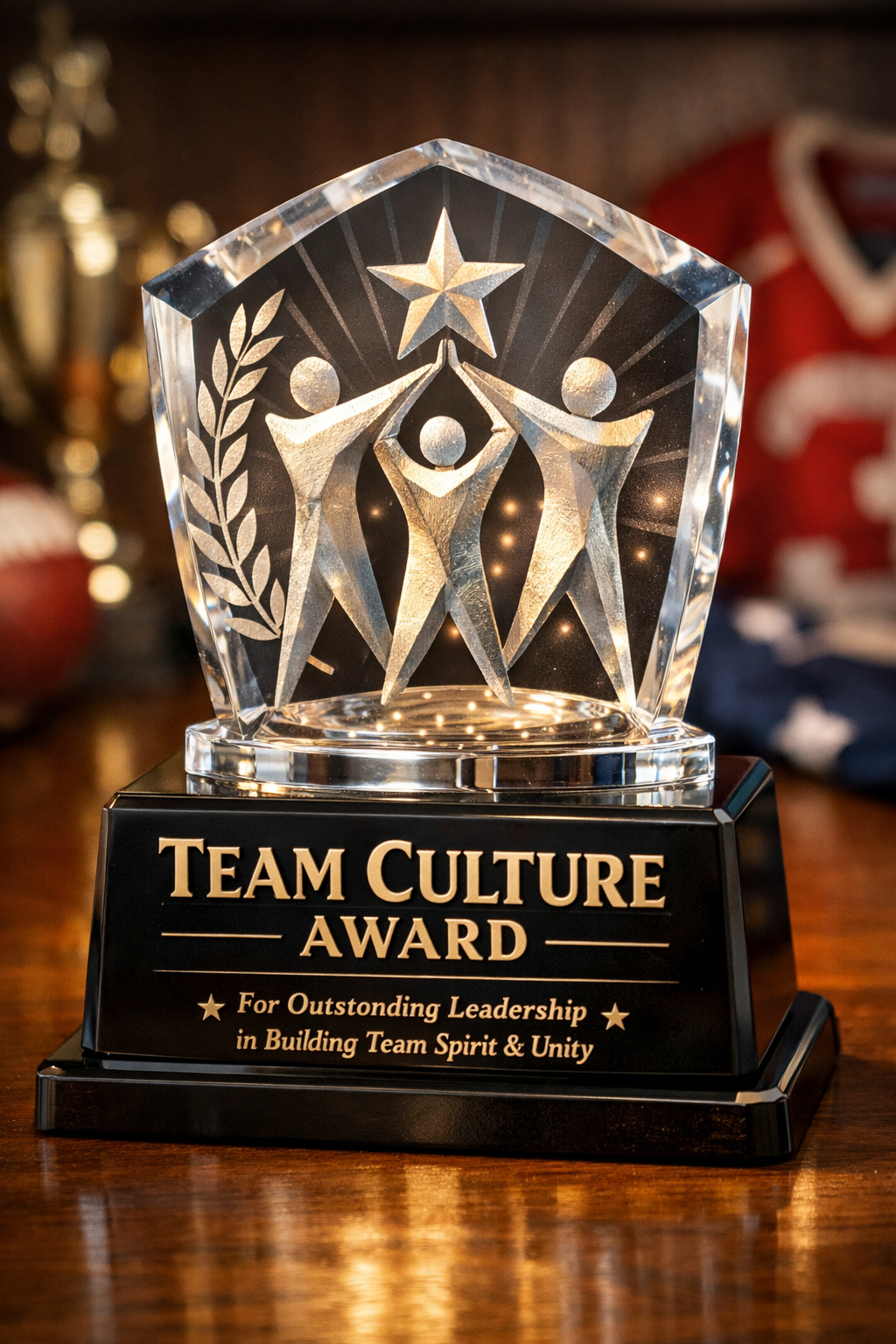
This Team Culture Award goes to Larry Carlson because he embodied what team culture is: belief, patience, courage, and care for people who are still figuring out who they can become. In one short season, he turned a gangly midfielder into a solid goalkeeper who would carry those lessons into college, coaching, and life.
Larry, I wish I could hand you this award in person, on a field somewhere, with a beat‑up ball and a few goalkeepers warming up behind us. You’re gone, but your goalkeeper hands are on every team I coach and every player I encourage to keep working. Thank you for believing in me before I believed in myself. This Team Culture Award is yours.