
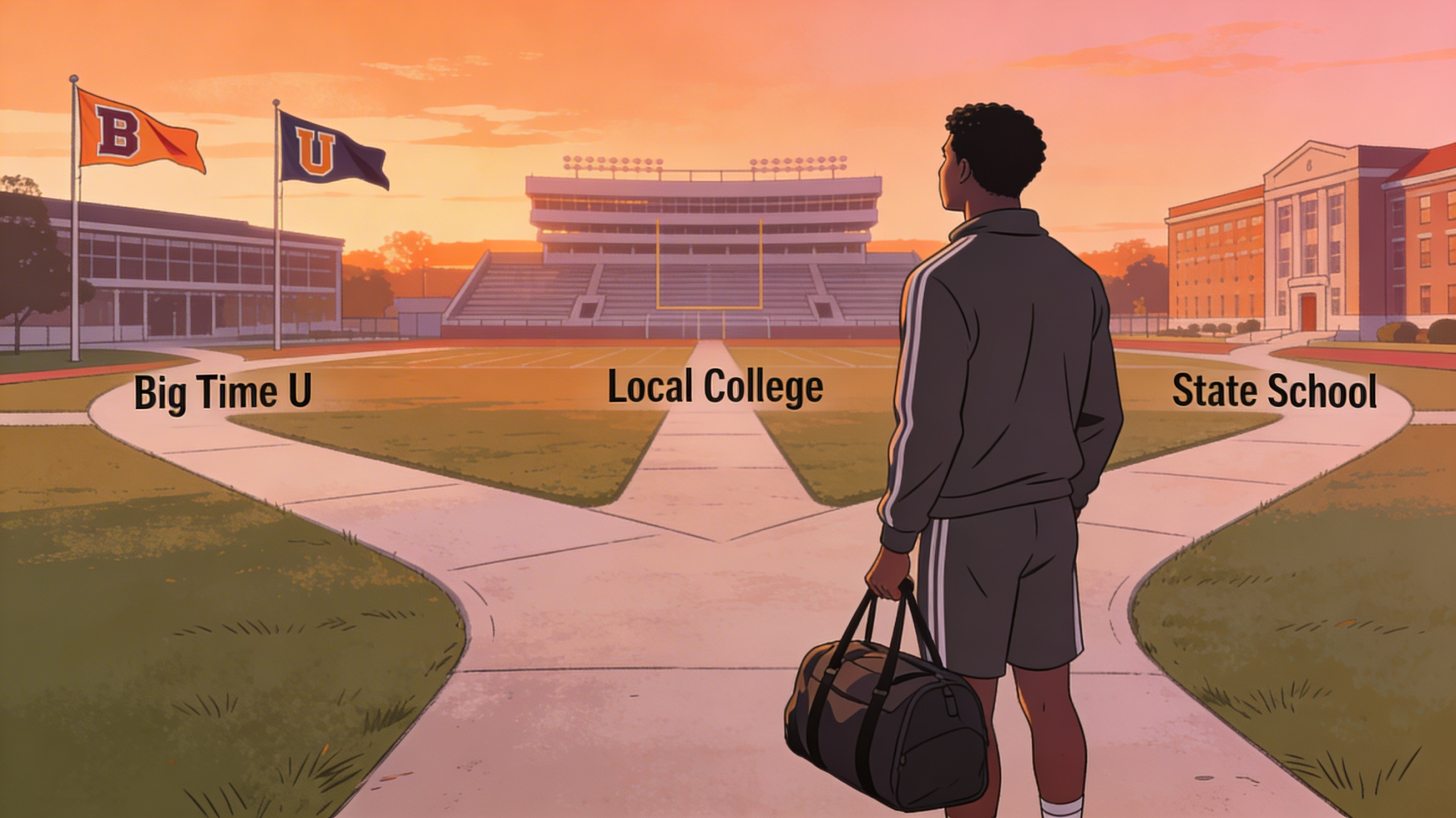
At TeamCulture.net, our mission is to help athletes, coaches, and parents build stronger, more positive team environments—both on and off the field. We believe that great teams start with great decisions and one of the most important decisions an athlete will ever make is where to commit to play in college. Keep reading if you want to know more about the pitfalls of the college recruitment process and how to select the best college athletic program for you (or your son or daughter).
Why Do So Many College Recruits Choose the Wrong Program?
Every spring, my social media feed fills up with photos of beaming high school athletes holding up college jerseys, announcing their commitments with pride. It’s an exciting milestone—and one that’s worth celebrating. But as a college coach, I’ve seen the other side of those announcements too. Many student-athletes end up regretting their choices just months after digging in their cleats on campus.
Why do college recruits choose the wrong program? Because the college commitment process is full of emotional and practical traps that can easily cloud an athlete’s judgment. Below, we’ll break down the most common mistakes—and how you can make a smarter, more holistic decision about your future as a college athlete.
The prestige of a school or sports program is one of the most overvalued factors in recruiting. Everyone loves the idea of joining an elite college team—or posting that dream photo announcing their commitment—but the truth is harsh: only about a third of athletes entering any college roster will be truly make an impact on that team/program.
If you’re not projected to be in the top half of that program’s incoming class, the odds of being a consistent starter are slim. Many players struggle when they move from being the go-to athlete on their club or high school team to fighting for minutes in college. Confidence can fade quickly when you aren’t getting the minutes you are accustomed to.
Compounding this, club coaches and parents often push players toward high-prestige programs to validate their own sense of success. But this decision isn’t about them—it’s about you. Choose a program where you can play, contribute, and grow, not just where you can pose in a fancy jersey and make your old club coach proud.
2. Monetary Misunderstanding
Scholarship offers can be incredibly misleading. While full-ride athletic scholarships exist, they’re exceptionally rare. Most college athletics—notably NCAA Division II, NAIA, and junior colleges—operate on partial scholarships, while NCAA Division III programs can’t offer athletic aid at all.
Too often, recruits focus on the size of the scholarship offer rather than the total cost of attendance. A $10,000 athletic award at a private NAIA school might sound generous—until you realize you still owe $30,000 per year. Meanwhile, a junior college or in-state option may advertise only a modest discount, but the overall cost is a fraction of that total.
This math matters. Debt is real, and unless your major directly leads to a high-paying profession (think nursing or engineering), you’ll feel the weight of those financial choices for years. Evaluate the true net cost and think beyond the next four seasons to the next four decades of your financial life.
3. Beware of Poor Coaching
Not all coaches are created equal, and unfortunately, not all of them have your best interests at heart. Some prioritize winning at all costs, building programs around short-term results rather than long-term player growth. Many others work at tuition-driven schools where their real job isn’t developing players—but recruiting paying students to keep the school afloat. Both can lead to frustrating, transactional environments where you’re treated as a number rather than a person.
When a coach recruits you, pay close attention to both their intentions and their communication style. Do they take time to understand your academic goals and personal strengths, or do they simply pitch roster openings? Do their emails feel thoughtful and personal, or copy-and-pasted and rushed?
Strong coaches build trust during the recruiting process. They talk openly about your role, your development, and how their program supports your success—on the field and beyond it. If a coach pressures you to commit quickly or talks more about “filling spots” than mentoring athletes, that’s a red flag.
Before committing, talk to current players and ask them what the environment is like day-to-day. They’ll tell you whether the coach truly invests in their athletes—or just recruits relentlessly to stay employed.
4. Ignoring the Environment
It’s easy to forget that college athletics is about more than the game—it’s about where you’ll live for several years of your life. I’ve seen many Oregon high school athletes head to programs in the Midwest excited to start a new adventure, only to return home after a year because the weather, culture, or social environment didn’t fit them.
Visit campus if possible. Walk through the student union. Listen to how students talk to each other. Ask yourself whether this place feels energizing to you. Think about what daily life looks like beyond practice—because even the best college athletics experience includes plenty of hours away from that sport doing other fun things.
5. The Easy Transfer Illusion
Transferring can seem like a quick escape from a bad situation, but it rarely fixes the root problem. Changing schools is time-consuming, expensive, and can derail your academic progress or eligibility. On top of that, many athletes discover that the same issues—lack of playing time, poor communication, or unrealistic expectations—follow them to the next school because they haven’t addressed the underlying causes.
It’s almost always better to choose a college carefully the first time than to rebuild from scratch later. Take your time now to make sure the environment, coaching staff, and team culture match what you need to thrive, so you’re less likely to feel pressure to transfer down the road.
That said, if you’re uncertain about where you want to be or what you want to study, junior colleges can be a smart option. Yes, you’ll need to transfer after two years if you want a four-year degree, but many junior college coaches are excellent at helping players connect with quality four-year programs. Your experience, playing time, and awards at the junior college level can make you a far more attractive recruit later on and may even allow you to leapfrog athletes who barely saw the field during their first two years at a four-year school.
How College Recruits Can Select the Right Program
Once you narrow your options, ask yourself these five core questions to help you select the best program for you:
- Coach Communication: Does the coach reply promptly and personally to your messages? Quality communication indicates genuine interest.
- Academic Satisfaction: Would you still want to attend this school if you couldn’t play your sport? If an injury took you out, would you feel proud of that degree?
- Research the Coach: Talk to current players, assistant coaches, or alumni. You’ll quickly pick up whether the program develops people or just pushes performance.
- Financial Reality: Know the full yearly cost—including housing, meals, travel, and books. Compare it with your likely career income.
- Team Culture: This may be the most important element. Is the environment supportive, accountable, and growth-minded? Do players enjoy being part of the team? Programs built purely around results tend to burn out their athletes—and their coaches—fast.
When you find a coaching staff that values you as a person, a team that challenges you, and a school that fits your academic goals, you’ve found the kind of college experience worth committing to.
The Bottom Line
Choosing a college athletic program isn’t about chasing a logo or maximizing scholarship money—it’s about finding the environment where you can belong, develop, and succeed. When you land in a program with strong team culture, a supportive coaching staff, and an academic path that excites you, everything else—from performance to personal growth—tends to fall into place.
Best wishes in your college search,
Coach Shawn
If you enjoyed this article, subscribe to our free newsletter for more articles and resources on leadership, athlete development, and building team culture that lasts.
More Team Culture News
-

Team Culture Pillar #2: Compassionate Communication Is the Norm
Compassion under pressure defines strong team culture. When honest feedback flows with respect, players grow fearless and connected. Continue Reading
-

10 Things Captains Do to Build Strong Team Culture
Great captains build strong team culture through daily habits like arriving early, listening actively, and competing hard. Continue Reading
-

Wankah Award: Coaches of Females Who Don’t Use ACL Prevention Exercises
This Wankah Award goes to all coaches who skip ACL prevention exercises for female athletes! My 15-min routine: 7 yrs, 200+ players, zero ACL tears. Continue Reading
-

Team Culture Award #3: Emma Hayes
Emma Hayes, our 3rd Team Culture Award winner, transforms every coaching environment she sets her managing boots in. Continue Reading
-

Team Culture Pillar #1: Everyone Feels Highly Valued
When everyone feels highly valued, roles gain meaning, effort skyrockets, and team culture becomes the engine behind performance. Continue Reading
-

Top 10 Reasons Why I Coach College Soccer
I like to remind myself why I coach college soccer—because when the grind gets tough, remembering my “why” pulls me back to the heart of the job. Continue Reading
-

Wankah Award: The GK Coach Who Forgot Tomorrow’s Game
Volunteer GK Coach Shawn wins this Wankah for a reckless pre-game dive drill that injured his star keeper, costing her a shot vs. Jesuit powerhouse—proving old drills aren’t… Continue Reading
-

The Composure vs. Intensity Thermostat
Whether consciously or not, every coach decides the setpoint of the Composure vs. Intensity thermostat. So, how can you dial up the best thermostat setting for your team? Continue Reading
Leave a Reply